



The Niger Delta suffers regular oil spills that contaminate farmland, lakes and rivers, destroy local crops and deplete animal and fish populations. Abosede Omowumi Babatunde writes that the problem is affecting the local culture. Traditional fish and yam festivals, used to celebrate a bountiful harvest, are no longer sustainable. She proposes steps to protect local food systems and cultures and provide local people with resilience against further environmental degradation.

In the oil-rich Niger Delta region of Nigeria, 70 per cent of people live in rural areas and the majority of them rely on subsistence farming, fishing and the collection of non-timber forest products for their livelihood. The presence of the oil industry in this region has adversely affected the production of food and the food culture of local people, which has increased their vulnerability to food insecurity.
To the people of the Niger Delta, food is not just considered a basic human need. There are cultural values attached to what they produce and consume, and it is central to their cultural identity, wellbeing and existence.
Oil pollution and traditional livelihoods
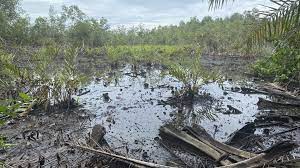
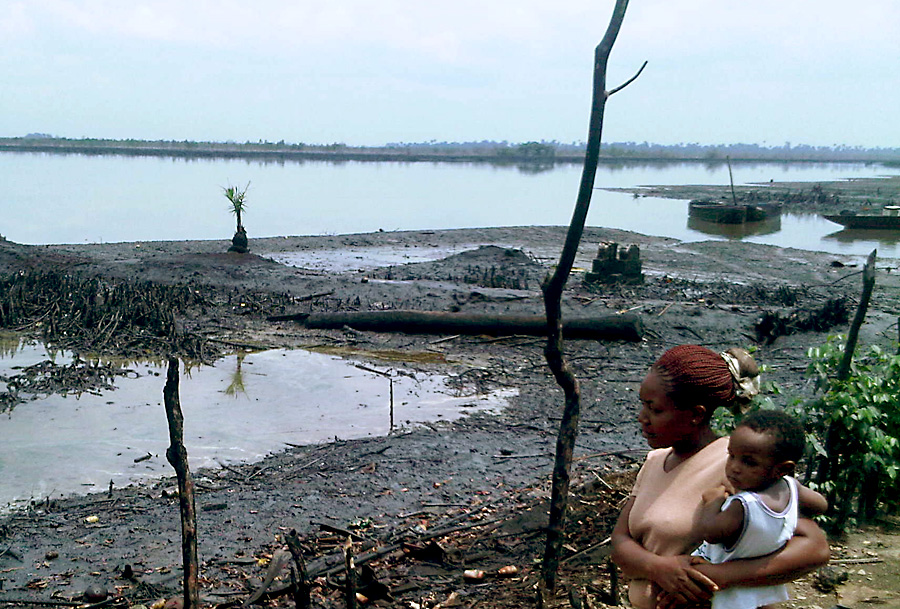
The Niger Delta suffers regular oil spills and oil companies are often slow to clean up the mess. Although the oil companies are expected to clean up spills within 24 hours, it usually takes several weeks before they respond. As a result of this lag, the oil spreads into farmland, lakes and rivers, causing havoc to agriculture, fish, and local flora. In the dry season, the oil sinks into the ground, destroying all the undergrowth. In the rainy season, it dilutes but spreads over a wider area.
Clean up operations are often haphazard. Oil companies usually use local contractors who in turn engage local youth to clean up the spill. The youth often deal with spills by setting the oil on fire, which can destroy natural resources such as raffia palms, palm trees, and crops. Recently, oil spills have become more common because of oil theft and informal low scale oil refining. These illicit activities have become an alternative livelihood for local people, especially impoverished youth, but it worsens environmental degradation and has disastrous effects on traditional livelihoods.
Spills are not the only cause of environmental damage from the fossil fuel industry. Gas flaring is a major local pollutant in the Niger Delta. Gas is a by-product of oil extraction, which is burnt, releasing nitrogen and sulphur oxides. When these gases mix with moisture in the air, it creates acid rain, which devastates agriculture yields and aquatic life. In oil communities, those who have their farmland close to flow stations are the worst affected. Flow stations are facilities located along oil and gas pipelines where oil and gas are processed before being transported to market. In some cases, gas flaring has resulted in fires that have completely burnt down large expanses of farmland, and animals are killed or driven away by heat, smoke, and noise from the flared gas. Despite the damage, local people rarely receive compensation from oil companies for the displacement of their traditional livelihoods.
Declining food production and culture
The fish and animals that were commonly found around the Niger Delta before the advent of oil exploitation are suffering from depleted populations or complete extinction. Some varieties of bush meat have almost all disappeared because of oil spills and acid rain. Local women are significantly affected by the declining marine resources such as shellfish, crabs, and oysters that they used to gather from the streams and mangroves for consumption and sale. In the coastal communities, moon fish has become scarce, while scale fish that used to be plentiful in natural fishponds have disappeared. The populations of tilapia and catfish are depleted, and fishermen must travel far out to sea for their catch, which is often small and contains fish that smell of crude oil and are not safe for consumption.

Oil pollution has also affected traditional cultural practices. Fish and yam festivals, which were organised to celebrate a bountiful harvest during rainy and harvest seasons, are no longer sustainable.
As food production decreases, local people find it difficult to access staple food that is indigenous to the region and is commonly consumed in their communities. Most of the indigenous food consumed in the oil communities is prepared with cassava. In the Owodokpokpo-Igbide community, the indigenous dish is garri and starch (made from fermented cassava), eaten with soups made of banga (palm fruit) or fish pepper. In Otuasega, fufu (pounded meal) is made from fermented cassava (akpukuru) with ogbono (wild mango) and fish. The decline in cassava yield is attributed to the effect of oil pollution on soil nutrients and this affects the availability of these local foods. When oil spills affect soil nutrients, this in turn affects cassava leaves, and if they grow at all, they grow slowly and only yield tiny tubers.
Other staple food crops that are indigenous to the region such as yam, plantain and cocoyam are often not available because of poor harvests. In the Beneku community, the high cost of yam seedlings and the threat of pests have prevented most farmers from cultivating yam, even though it is the local food, indigenous to the community. In Otuasega, mama coco (known as amasi in the local dialect), is a species of cocoyam that used to be a local delicacy eaten with palm oil and smoked catfish. But the crops planted since the completion of the Nigerian Liquefied Natural Gas plant project have all withered.
Preservation
The preservation of the environmental resources, livelihood, and food culture is essential for the protection of the social and economic wellbeing of the people in the oil communities in the Niger Delta region. Since indigenous food is key to people’s food culture and essential to their dietary intake, their food security is tied to the availability, accessibility and affordability of their indigenous food.
The ongoing environmental remediation project in the Niger Delta requires concerted commitment of the government and oil companies. It should be complemented by efforts to provide alternative and sustainable livelihoods and empowerment programmes for young people to tackle the alarming rate of pipeline vandalism and artisanal oil refining. Taking such steps now will help to protect local food systems and cultures and help provide local people with resilience against further environmental degradation.
Abosede Omowumi Babatunde