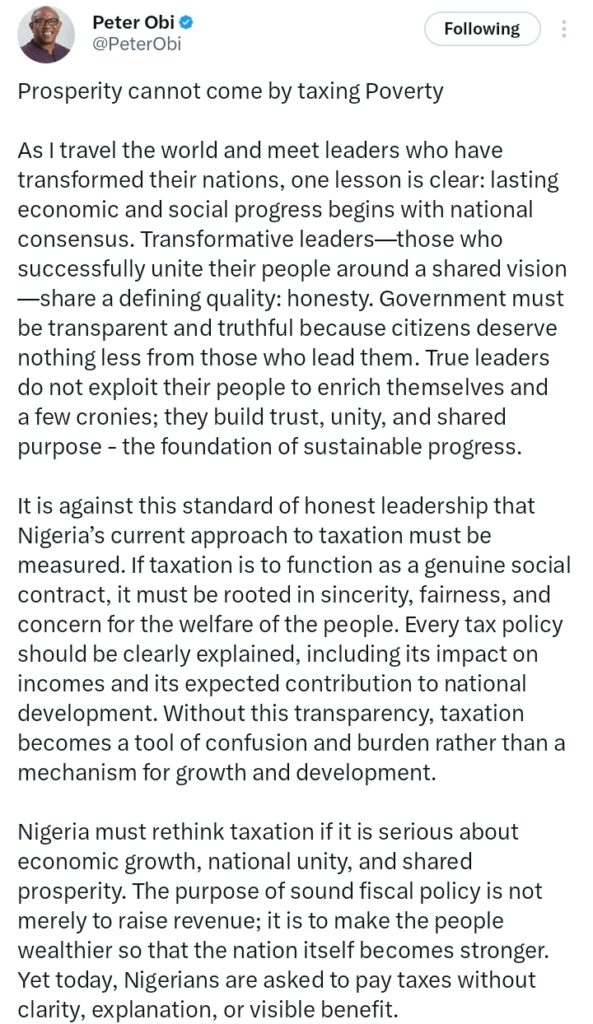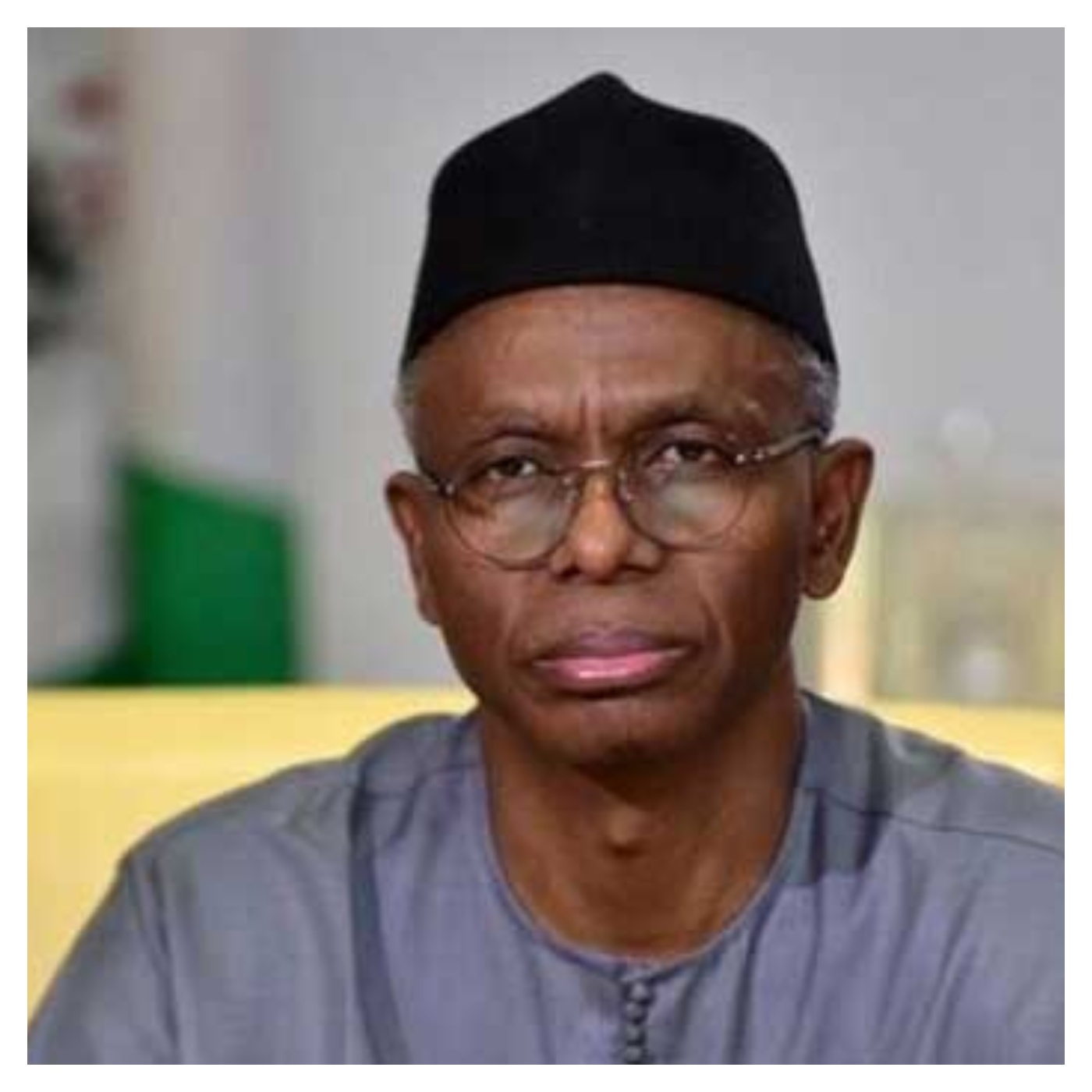


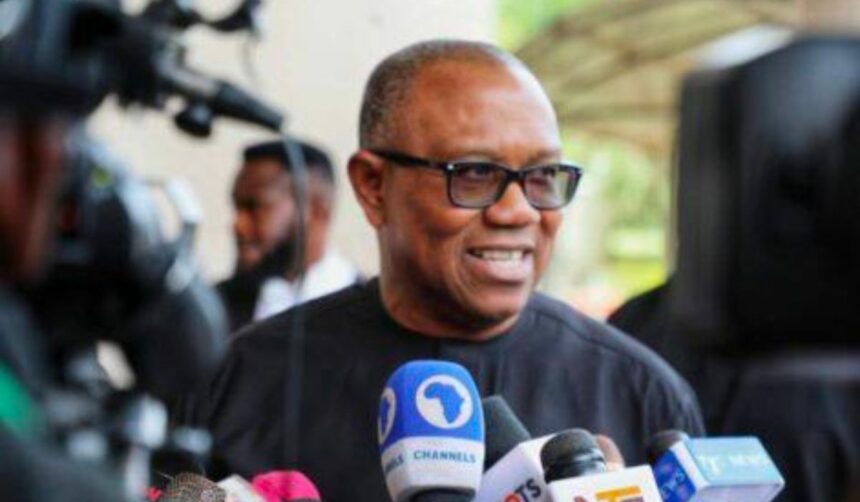
Former Anambra State Governor Peter Obi has issued a scathing critique of Nigeria’s current taxation approach, calling for fundamental reforms rooted in transparency and the economic empowerment of citizens rather than increased revenue extraction.

Speaking on the principles of transformative leadership, Obi drew on observations from his international engagements to emphasise that honest governance forms the bedrock of national progress.
“As I travel the world and meet leaders who have transformed their nations, one lesson is clear: lasting economic and social progress begins with national consensus,” Obi stated. “Transformative leaders—those who successfully unite their people around a shared vision—share a defining quality: honesty.”
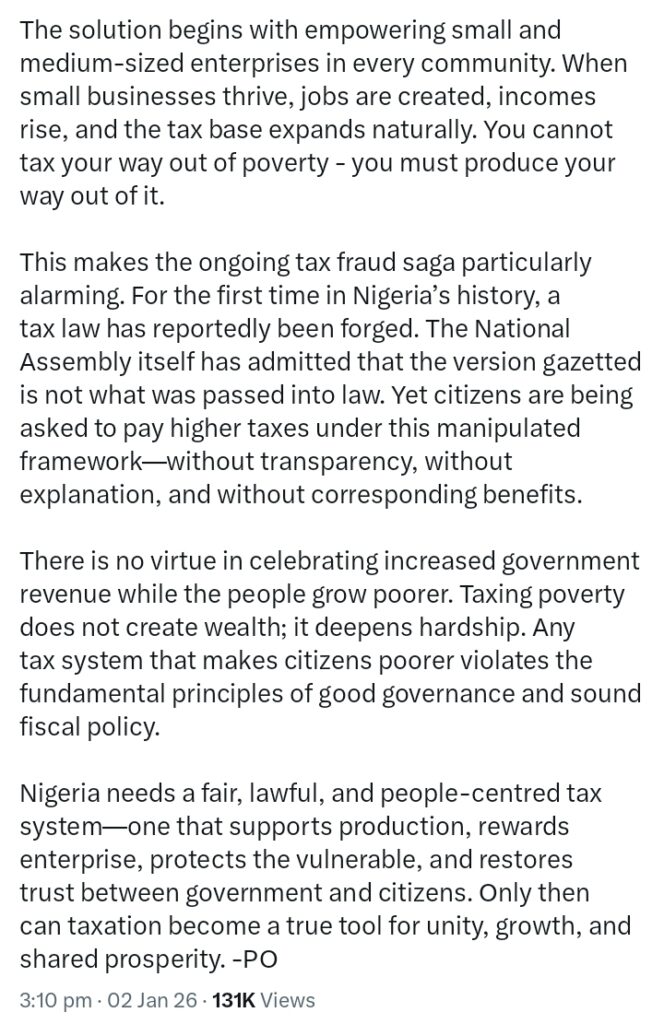
The former governor raised serious concerns about what he described as a historic tax fraud scandal, claiming that, for the first time in Nigeria’s history, a tax law has allegedly been forged.
“The National Assembly itself has admitted that the version gazetted is not what was passed into law,” Obi revealed. “Yet citizens are being asked to pay higher taxes under this manipulated framework—without transparency, without explanation, and without corresponding benefits.”
Obi argued that Nigeria’s tax policy fails to meet the basic standards of a genuine social contract between government and citizens, lacking the clarity and fairness necessary to build public trust.
“Every tax policy should be clearly explained, including its impact on incomes and its expected contribution to national development,” he said. “Without this transparency, taxation becomes a tool of confusion and burden rather than a mechanism for growth and development.”

The former presidential candidate emphasised that wealth creation, not revenue extraction, should be the primary goal of fiscal policy.
“There is no virtue in celebrating increased government revenue while the people grow poorer,” Obi declared. “Taxing poverty does not create wealth; it deepens hardship.”
He proposed empowering small and medium-sized enterprises as the foundation for sustainable economic growth.
“The solution begins with empowering small and medium-sized enterprises in every community,” Obi explained. “When small businesses thrive, jobs are created, incomes rise, and the tax base expands naturally. You cannot tax your way out of poverty – you must produce your way out of it.”
Obi concluded by calling for comprehensive reform: “Nigeria needs a fair, lawful, and people-centred tax system—one that supports production, rewards enterprise, protects the vulnerable, and restores trust between government and citizens. Only then can taxation become a true tool for unity, growth, and shared prosperity.”
The allegations of tax law forgery and the calls for transparency come at a time when many Nigerians are grappling with economic hardship and questioning the effectiveness of government fiscal policies.