

American presidential and congressional/senatorial elections happen on the first Tuesday of November on every election year. This 2024, the 5th of November, just three days away will determine one of the most consequential Presidential elections in United States‘ history. Great as the United States is as seemingly the lone super power, no woman has been elected president. The very first major political party nomination by the Democratic Party was that of Secretary Hilary Clinton in 2016.

A Hilary Clinton, former first lady, two-time Senator and former American Secretary of State won the popular votes during the 2016 election by more than three million votes but lost through the electoral college to the Republican nominee and 45th president, Donald. J Trump. Kamala Harris, broke a record in 2020 by being elected the Vice President to President Joe Biden becoming the first woman of South Asian and African heritage to become Vice President in America.
For the 2024 election, President Joe Biden patriotically handed over the baton to Mdam Vice President, Kamala Harris. A very remarkable historical first that is seen as not just a very selfless act but also a stamp of trust and patriotism for his Vice president and America. A woman of many firsts in her career as a public servant who became the first Asian/African American to be elected the Attorney General of California and later a Senator of the United States.
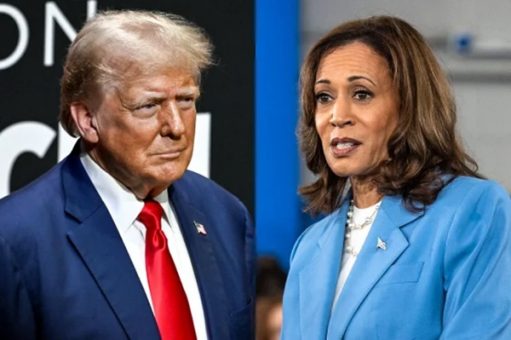
With the nomination and endorsements from almost all Democrats and some Republicans, Vice President Harris came into the Presidential race just a few months to the D-day and is squaring up with former President Trump. The two candidates have kept the global media buzzing as pundits battle with realities and permutations. In 2016, they were wrong after the ballots were counted. A Hilary Clinton, a seasoned lawyer and former Secretary of State lost to the new kid in politics, the businessman, Donald Trump.
As the world holds its breath as the first female Vice President of America goes against former President Trump, the stakes are too high. This election is like no other in the history of America. America in its global policeman of democracy has never elected a woman despite women getting the right to vote about a hundred years ago.
The Roundtable Conversation feels that beyond all the hullabaloo about the different electoral value of the various demographics and their ability to swing votes, too many lessons stand out for very unstable democracies in developing countries especially Nigeria. The history of the first Tuesday in November as the election day in America is very profound. It was chosen with the people, who are the mandate givers in a democracy in mind. It was chosen as the freest day that allows the most agrarian population in the 19th century to come out and vote with little inconvenience as regards their leaving their jobs or being impacted by some inclement weather.
As time went on and occupations diversified and people embraced other non-agrarian occupations, the early voting and mail voting was introduced by law. Today, these kinds of voting bring convenience to every voter in America. Geography and distance is never a disadvantage to any voter. This is an inclusivity that is lacking in the electoral system of Nigeria. The political class in Nigeria seems to have no plans for any form of inclusivity in the Nigerian political space.

People could give the puerile excuse that Nigeria’s independence is just less than a century old but they forget that the fathers of America laid a very solid foundation that gave power to the people. This merely takes patriotism, humanity and a large heart and not a million years. The Nigerian political class seems less patriotic than the founders of American democracy and writers of their constitution.
The Nigerian democracy is fashioned after the American model but in some weird way, the political class merely picks and chooses what favours individuals, the male gender, groups and regions. This attitude is the albatross of the Nigerian model of democracy. There is exclusion, there is no ideological identity of the political parties unlike the American model. The Nigerian political parties lack ideological convictions in a way that the late political scientist and former Senate President, Chuba Okadigbo had described the political parties as mere gatherings of people.
With no strong ideological leanings, the political parties lack character in ways that voters can trust or country thrive from. In fact, there is a huge trust deficit on politicians because they see the political class as selfish and very politically fluid as majority of politicians effortlessly defect from one party to the other depending on the political expediencies they expect. The Republican and Democratic parties in America are easily identifiable by the ideals they are formed on.
Even though America has never elected a woman president, there is a sizeable representation of women in party leaderships, many women have been elected mayors, governors and to various political offices in ways that is progressive. In Nigeria, the existence of the very vacuous, “Women Wing” of political parties is an eloquent testimony of the subtle and overt sexism that exist in the Nigerian political party system. Somehow the political parties in Nigeria are exclusively run by men and women are offered tokens as “Women Leaders” while there are no “Male Leaders” or Male Wings of political parties. Less than 10% of women win party nominations.
There is no equity in representation as the youths, women and those living with disabilities always clamor for inclusion. There is also no financial order in the Nigerian political space unlike in America where there is a well monitored financial order in ways that fraudulent financial donations to parties either by corporate bodies or individuals is often monitored and defaulters punished.. Conversely, the Nigerian political system seems to be a ‘winner takes it all’ as individuals with enough money and influence often impact the administeration of the political parties negatively.
The stability of electoral institutions and dates is one aspect of democracy that Nigeria must try to emulate. More often than not, electoral systems are corrupted by leaders and made unstable. As Americans go to the polls everyone sees how near perfect the system works. There is an impersonal institution that is loyal to the system and not individuals no matter how influential they are in the country. This points very much to Barack Obama’s advice to Africans to build strong institutions rather than strong individuals. Strong institutions are more viable for development as they are more productively enduring than seemingly strong individuals given the mortality effect every human is subject to.
The American electoral system is very compelling when it comes to individual self-presentations. Candidates put themselves on the public space once they declare their intentions. Winning or losing or even dropping out at the early stages is often almost automatic given the demands of the voters through holding individuals accountable. Candidates are expected to face the voters through various media and town hall platforms during campaigns that even though they still use surrogates, the candidates must be leading. In the Nigerian system, sometimes, the candidates feel the voters don’t matter.
Read Also: This American democracy is alien!
The American system gives power to the voters even if there are some missteps sometimes. No human system is perfect but Nigeria can do better with its electoral system. Most times the Nigerian electoral system is so flawed that it is a known fact that Nigeria has some of the most litigious elections in the world with a substantial number of elections often determined by the law courts. In some instances, post-election litigations last years into the tenures of some usurpers of power. In these instances, voters are denied their voices and discontent reigns supreme.
With each successive American election, the world sees the patriotism in the people. This 2024 presidential election is even more profound as many Republicans are for the first time voting for Vice President Harris based on what they term love of country and loyalty to the constitution. This is possibly a sentiment lacking in most Nigerian politicians as power is often about, personal ego, personalities, regional and ethnic loyalties and even, sadly, religion. These are very divisive sentiments and its not surprising why the country is as underdeveloped as it is divided along ethnic and religious lines.
The 2024 American election again projects the power of voting demographics. Each candidate will win or lose based on how their policies on the economy, immigration, gender rights/justice, abortion, etc. appeal to voters across America. 64 years after Nigerian independence, politicians still campaign based on the provision of basic infrastructural facilities like electricity, roads and schools. These seem to be the permanent clichés at both state and federal elections.
While infrastructural development is necessary, most times the campaign promises are mere smokescreens. Successive governments at local, state and federal levels seem to be disloyal to their campaign promises. Sadly, more often than not, such failure on campaign promises do not impact on the chances of most Nigerin politicians to access power at future elections. This speaks to the powerlessness of the electorate in a developing country like Nigeria.
As the world holds its breath as the clock ticks towards one of the most significant elections in US history, the greatest lesson must be learnt by citizens of Nigeria, one of the most populous and endowed countries in the world. Adopting the American democracy model must not just be on paper or about the convenient. Profound lessons must be taken away from America not as a perfect system but as a functional system where the rule of law works to hold every citizen to account and where loyalty of individuals is to the nation and not to an individual, state or political party. America is great because the citizens love and work sincerely for their nation and people.
By Nnedinso Ogaziechi @The Nation