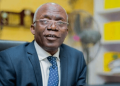



Glory Oguegbu tells Berlin that ‘history and your children will judge you’
The Berlin Energy Transition Dialogue was on the receiving end of an impassioned, angry and yet hopeful plea to “stop waking the dead” by leaving fossil fuels in the ground.

And Nigerian climate activist Glory Oguegbu also had a message for the developed world to stop telling Africa to ‘do as I say and not as I do’ when it comes to planning its energy transition.
Oguegbu is the founder and chief executive of Nigeria’s Renewable Energy Technology Training Institute (RETTI) and the RETTI Virtual University for Energy Education, which is investing in skills development for the energy transition.
She is upbeat about the European Commission’s RePower EU and Fit For 55 strategies, and about the fact that Nigeria was the first African country to draw up an energy transition plan, followed by Ghana.
She also believes the Biden administration’s Inflation Reduction Act “sends a strong signal of hope”.
But she is disappointed about the messages from the developed world about how Africa should conduct its energy transition.
“You ask Africa not to develop its own [fossil fuel] projects in the same way that you have developed yours. You sit in your comfortable electrified offices and tell Africa how to generate their electricity.”

More from Berlin Energy Transition Dialogue
World needs annual 1000GW of renewable energy to hit COP28 pledge
Germany ‘back in the game’ on energy transition says renewables chief
Nationalism is threat to energy transition says climate action minister Habeck
She wondered if the West championed renewable energy out of true altruism, or if instead it is “to lead the world and sell technology”.
“You cannot have your cake and eat it. This double-standard has to end. The world is watching and history will judge you: your children will judge you.
“Leave the ‘dead’ in the ground where they belong.”
The need to ensure the global South is included in the energy transition was a recurring theme of the first day of the Berlin Energy Tranansition Dialogue.
Francesco La Camera of the International Renewable Energy Agency (IRENA) said new financing models needed to deliver “certainty for infrastructure in Africa”.
IRENA has found that despite their considerable renewable potential, developing countries in these regions have received disproportionately low levels of investment.
Although energy transition-related investments have reached a record high, exceeding $2 trillion in 2023, emerging markets and developing economies accounted for just over half of global investments.
Some 120 developing nations attracted only 15% of global renewable investment, with Sub-Saharan Africa receiving less than 1.5%, despite being home to the highest share of energy-deprived populations.
La Camera said greater international cooperation will be key to ensuring that finance flows to the Global South.
“Strategic use of public finance is paramount to attract investment at scale and deliver an inclusive energy transition that yields socio-economic benefits for all.
“This requires structural reforms, including within multilateral finance mechanisms, to effectively support the energy transition in developing countries.”
Germany’s Federal Foreign Minister Annalena Baerbock said it was vital to ensure “that the expansion of renewables takes place in a fair and just way, because an estimated 600 million people in Africa alone still have no access to electricity”.
By Kelvin Ross