

…Decry Political Meddling in Traditional Institution

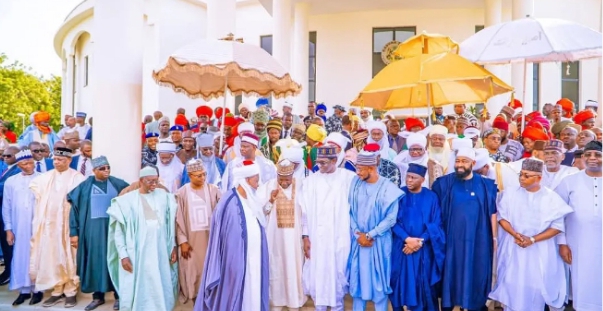
Traditional rulers from the North West geopolitical zone have urged the National Assembly to grant constitutional status to traditional institutions in the ongoing amendment of the 1999 Constitution. They warned that the unchecked creation of emirates, kingdoms, and chiefdoms lacking historical and cultural legitimacy is eroding national unity and effective governance.
Presenting their position at the North-West Centre B Public Hearing on the 2025 Constitution Review held in Sokoto, His Highness Justice Lawal Hassan Gummi, OFR, Emir of Gummi and Chairman of the Coordinating Committee of the Northern Traditional Rulers Council (NTRC), condemned what he termed political encroachments into the traditional leadership space.
The monarchs noted that such political interference undermines the influence of traditional leaders in promoting development, fostering peace, and mobilizing communities to tackle security challenges.
In their memorandum to the House of Representatives Committee on Constitution Review, the royal fathers emphasized the unique historical significance and enduring relevance of traditional institutions in Nigeria’s sociopolitical framework. They highlighted how, in many parts of the world, traditional structures function alongside democratic systems, playing important roles in national development.
Among their key demands was the reinstatement of the constitutional status formerly accorded to traditional rulers. They also advocated for the creation of a National Council of Traditional Rulers, comprising representatives from all states and chaired by the President of Nigeria.
The proposed council, they suggested, would serve as an advisory body to the Federal Government on a range of issues including national development, inter-religious relations, culture, and unity. It would also support conflict resolution, help mobilize community resources, and review cultural practices that may conflict with national goals.

Furthermore, they recommended that traditional rulers be included in the National Council of State, with three representatives drawn from each geopolitical zone, selected by the respective zones.
At the state level, the royal fathers proposed the formation of legally recognized State Councils of Traditional Rulers. These councils would advise governors on cultural, religious, and developmental matters, and deliberate on significant public concerns.
At the grassroots level, the monarchs called for the establishment of traditional councils to support local government authorities, offer security advice, monitor local projects, and coordinate disaster management efforts.
They stressed the importance of ensuring that the appointment and removal of traditional rulers follow established legal and customary processes, urging for the codification of each institution’s traditions and succession rules into law.
To safeguard the neutrality of traditional leadership, the rulers recommended shielding them from partisan politics, advising them to remain loyal to constituted authorities without becoming politically aligned. They also called for improved financial support to enable the traditional system to perform its roles effectively.
The traditional leaders expressed optimism that the current constitutional amendment would mark a watershed moment for the formal recognition and preservation of traditional governance as a pillar of modern Nigeria.
By Torkwase Nyiekaa @TheIndependent