

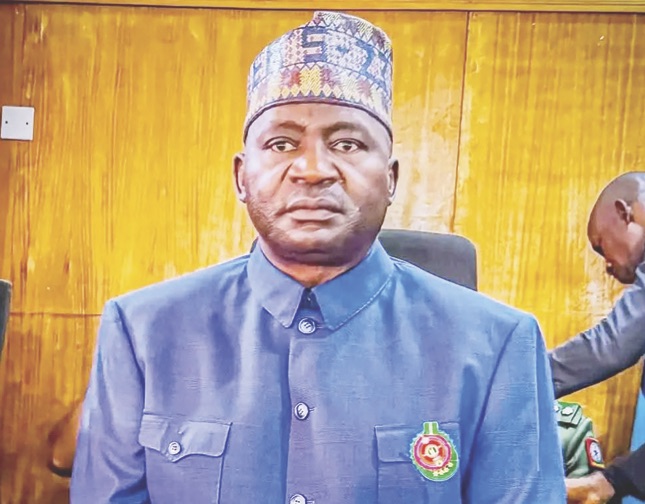
The appointment of the immediate past Chief of Defence Staff, General Christopher Gwabin Musa (rtd.), as Nigeria’s new Minister of Defence has heightened expectations within the country’s security and political circles. For many stakeholders, the appointment represents not just a transition in leadership but also a critical opportunity to reset Nigeria’s defence strategy at a time when insecurity remains one of the nation’s most pressing challenges.

Musa’s entry into the Defence Ministry comes at a defining moment. As a former Chief of Defence Staff and one of the most experienced counter-insurgency commanders of his generation, he assumes office at a time when Nigeria’s defence architecture demands urgent reforms, stronger accountability, and faster operational results. His track record of direct field engagement and his reputation for disciplined leadership have created a wave of optimism that he may drive long-awaited changes that past administrations struggled to fully implement. Defence sources say his tenure could set the tone for a more strategic and operationally effective military that is responsive to both national and regional security challenges.
Security experts believe that Musa’s background as a former CDS positions him to strengthen collaboration among the Army, Navy, Air Force, and intelligence agencies. For years, gaps in communication and operational coordination have hindered Nigeria’s ability to respond efficiently to threats ranging from terrorism and banditry to maritime crime and regional instability.
Under Musa’s leadership, there is an expectation that these gaps will be addressed through unified command-and-control structures, real-time intelligence sharing, and coordinated planning across various theatres of operation, including the North-East, North-West, Middle Belt, and the coastal regions of the South-South.
One major benchmark for Musa’s tenure, observers note, will be how effectively he eliminates inter-service rivalry and builds operational harmony—an issue that has long undermined Nigeria’s security response. Inter-agency disagreements have historically slowed operations, duplicated efforts, and weakened troop morale. Musa’s prior experience in leading joint operations could provide him with the rare practical insight needed to balance institutional interests while improving efficiency on the field. Many believe he has a unique opportunity to institutionalise lasting reforms that encourage cooperation rather than competition within the military establishment.
Nigeria’s armed forces also continue to struggle with outdated hardware, slow procurement procedures, and limited local production capacity. These long-standing issues have repeatedly weakened operational readiness and forced the country to rely heavily on foreign suppliers for critical equipment. Musa now steps into a ministry where expectations are sharply focused on modernising equipment and restructuring the acquisition process. He is expected to overhaul procurement procedures to improve transparency and speed, expand local defence manufacturing in partnership with the Defence Industries Corporation of Nigeria (DICON) and private-sector manufacturers, as well as prioritise investment in drones, surveillance tools, cyber capabilities, and smart logistics systems that support modern warfare.
During his ministerial screening, Musa highlighted the enormous cost of modern weaponry, noting that each medium-range precision missile fired—regardless of whether it hits its target—costs Nigeria about N150 million. This, he argued, underscores the need for strategic deployment, careful budgeting, and a shift towards sustainable defence financing. His comments signalled an awareness that the Defence Ministry must not only acquire new equipment but also ensure that resources are used wisely and aligned with operational needs.

On terrorism and violent extremism, Musa has reassured Nigerians that he will do “whatever it takes’’ to secure the country and that results will be visible “within the shortest possible time.’’ His confidence stems from his years of direct involvement in counter-insurgency operations in the North-East, where he previously commanded the Theatre Command of Operation Hadin Kai. Analysts say his experience on the frontlines will shape a more practical and adaptive approach to combating Boko Haram, ISWAP, and other armed groups that continue to pose threats to national stability. They also argue that his leadership could help rebuild civilian confidence in the military, particularly in communities that have suffered repeated attacks and displacement.
Beyond tactical operations, the Defence Ministry has historically faced scrutiny over opaque budgeting, weak oversight, and inconsistent project execution. Stakeholders now expect Musa to make procurement processes more transparent, improve auditing and project monitoring, and implement reforms that ensure defence spending is efficient and accountable. Lawmakers and civil society groups have consistently argued that transparency is essential for building both public trust and parliamentary confidence in the ministry’s policies. Musa’s reputation for disciplined and principled leadership has created hope that he may finally tackle the institutional bottlenecks that have slowed down reform efforts for decades.
General Musa’s operational credibility, extensive field experience, and discipline have raised hopes that he will deliver a more cohesive, better-equipped, and people-centred defence system. However, the challenges ahead remain substantial. Analysts caution that transforming Nigeria’s military will require patience, long-term policy implementation, adequate funding, and strong political backing from the executive and legislative branches. They note that even the most capable defence minister cannot succeed without institutional support and a clear alignment between military leadership and civilian oversight.
Another critical factor will be Musa’s ability to navigate Nigeria’s complex political landscape while pursuing military reforms. The Defence Ministry intersects with political interests, diplomatic engagements, regional alliances, and industrial considerations. His ability to balance these competing pressures without compromising operational priorities will shape the long-term impact of his tenure. Observers also expect Musa to strengthen Nigeria’s regional security partnerships, particularly within ECOWAS, to ensure coordinated responses to transnational threats.
As Nigerians watch the Defence Ministry enter a new chapter under General Musa, expectations are high. From modernising military equipment and improving troop welfare to strengthening regional partnerships and ensuring fiscal transparency, Musa’s tenure represents a critical opportunity to redefine Nigeria’s defence and security architecture. If successfully implemented, his reforms could enhance operational effectiveness; restore public trust in the military, and position Nigeria as a stronger and more reliable security actor in West Africa.
For now, all eyes remain on Musa as he navigates the complex terrain of national defence and strives to deliver results that millions of Nigerians are eagerly waiting to see.
By Philip Nwosu @TheSUN